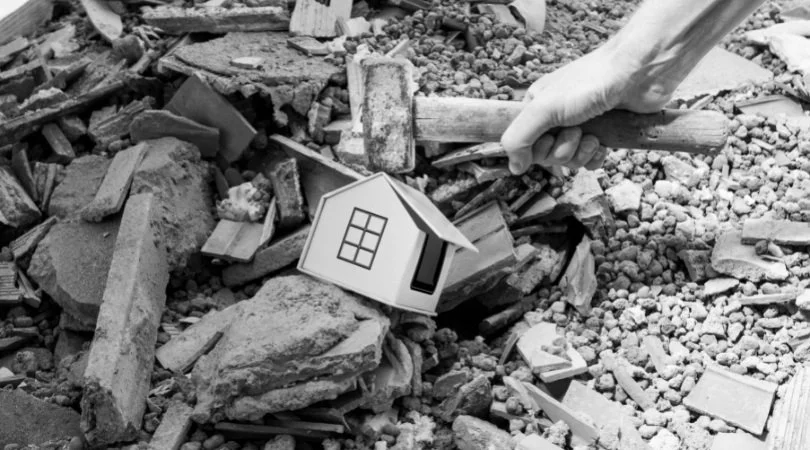
The question of whether to renovate, partially rebuild, or knock down and rebuild your home is a decision path lined with pros and cons, what-ifs, and how-tos. Ultimately, it’s a decision where you want to ensure you achieve the best value in line with your goals.
Many who plan to undertake a home upgrade project will spend months, and even years, trying to navigate which path will achieve their desired outcome for the right budget, timeline and quality. With so many decisions to make, so many professionals to engage, different planning approval options to consider, and the significant cost expected to be incurred, it can be a daunting task. To help navigate the process, we’ve developed this guide to help you understand when it’s worth renovating and when a full knockdown rebuild makes more sense, using practical criteria, cost comparisons, and professional planning advice.
Step 1: Evaluate the Potential of Your Current Home
Before diving into your dream kitchen or that gorgeous new wardrobe, step back and assess whether your existing house is the right foundation to build on.
Orientation – Does Your Existing Home Make the Best Use of the Site You’re On?
- Does it allow for sunlight when you want warmth, and shade when you don’t?
- Is your current home bright and airy with good cross-ventilation, or is it pokey, damp and dark?
- Are you making the most of any available views and outdoor living spaces, or are you staring into your neighbour’s property?
Structural Integrity
The current, or near-future, condition of your existing home will play a big part in deciding whether it’s worth keeping or demolishing.
- Are the foundations and framework solid and free from rising damp, termites, wood rot, movement and cracking?
- Is your home looking and feeling tired, and showing signs of age, inside or out?
- Does your home include period features worth restoring, such as original timber floors, ornate ceilings or a character façade?
Site Constraints
- Could zoning, heritage listings, or bushfire/flood overlays limit your design ambitions?
- Would a new build allow a more efficient footprint and better use of your site?
If your site or your current home’s structure is holding back your vision, a knockdown rebuild may be the cleaner, more cost-effective path forward.
Step 2: Clarify Your Brief, Budget and Long-Term Plans
A realistic brief and budget are key to avoiding overcapitalisation. Ask yourself:
- Are you upgrading your home for the next 10–15 years, or thinking about selling within the next five years?
- Do you want a modernised version of your current house, or something entirely new?
- How much are you willing to invest without exceeding the ceiling price for your suburb?
Cost Reality Check:
- Renovations can appear cheaper and faster, but can reveal structural surprises (e.g. shaky foundations) and building code compliance upgrades that escalate costs.
- Knockdown rebuilds require demolition and site preparation, but they deliver design freedom, energy efficiency and increased overall capital value.
Step 3: Compare Your Options
If your existing home has structural integrity and you want to keep some of the current floorplan and aesthetic features, a renovation or partial rebuild may be the better option. Let’s take a closer look at the available pathways.
Major Renovation
- Ideal for: Homes with a solid structure and good “bones” that simply need more space and/or refreshed finishes. In some cases, more space can be achieved by redesigning the current floorplan for better flow and functionality.
- Scope: Redesigned floorplans, updated kitchens and bathrooms, extensions or upper-level additions.
- Pros: Preserves character, often lower cost, and sometimes allows you to continue living onsite (depending on project scope).
- Cons: Layout can be constrained by the existing structure. Hidden defects can inflate costs. You also cannot increase the ceiling height of an existing home. If lofty ceilings are part of your vision, you’ll need to knock down and rebuild.
- Typical Timeline: 6–9 months.
Partial Rebuild
- Ideal for: Homes with sections that simply don’t work (for example, outdated extensions or awkward layouts) while retaining structurally sound areas. A classic example is an older Californian Bungalow with a poorly integrated extension.
- Scope: Remove poorly designed areas and rebuild for improved flow and functionality.
- Pros: Greater design flexibility and cost savings compared with a full rebuild.
- Cons: Integrating old and new construction can be complex. Some issues within the original home may remain unresolved.
- Typical Timeline: 8–12 months.
Full Knockdown and Rebuild
- Ideal for: Homes with poor structural integrity, inefficient layouts, or renovation costs that outweigh rebuilding.
- Scope: Complete demolition, site preparation, and construction of a brand-new home tailored to your lifestyle and block.
- Site Preparation Includes:
- Demolition of the existing home and removal of waste.
- Site levelling, soil testing and preparation.
- Construction of new footings, slabs and foundations.
- Pros: Complete design freedom, improved orientation, better energy efficiency and increased long-term capital value.
- Cons: Longer build time (12–18 months), higher upfront investment and temporary accommodation required.
- Typical Timeline: 12–18 months.
As with any major project, there are many obvious—and not so obvious—considerations. Seeking professional advice from experts who understand design, construction, planning approvals and site constraints is essential when assessing the renovation potential of your home.
Step 4: Factor in Lifestyle and Build Practicalities
- Can you remain living onsite during a renovation or partial rebuild?
- Are you prepared for the 12–18 month timeframe of a knockdown rebuild?
- Will your chosen approach meet your family’s needs for the next decade?
Step 5: Seek Expert Guidance Early
Choosing between renovating and rebuilding isn’t just about budgets and timelines. It’s about unlocking your property’s full potential.
- The structural viability of your existing home.
- Design options aligned with your goals and budget.
- Planning and approval pathways.
The Verdict: Find Your Tipping Point
If your home has a strong structure, sentimental value, and only needs targeted updates, a renovation or partial rebuild can transform it. But when extensive repairs limit design potential or cost efficiency, a knockdown rebuild often delivers greater freedom, value and long-term liveability.
MILEHAM’s architecture and construction team helps you assess every available option so your investment results in a home perfectly suited to your vision, lifestyle and goals. Book your personalised design consultation today to determine whether a renovation, partial rebuild or full knockdown rebuild is the smartest path forward for your home.