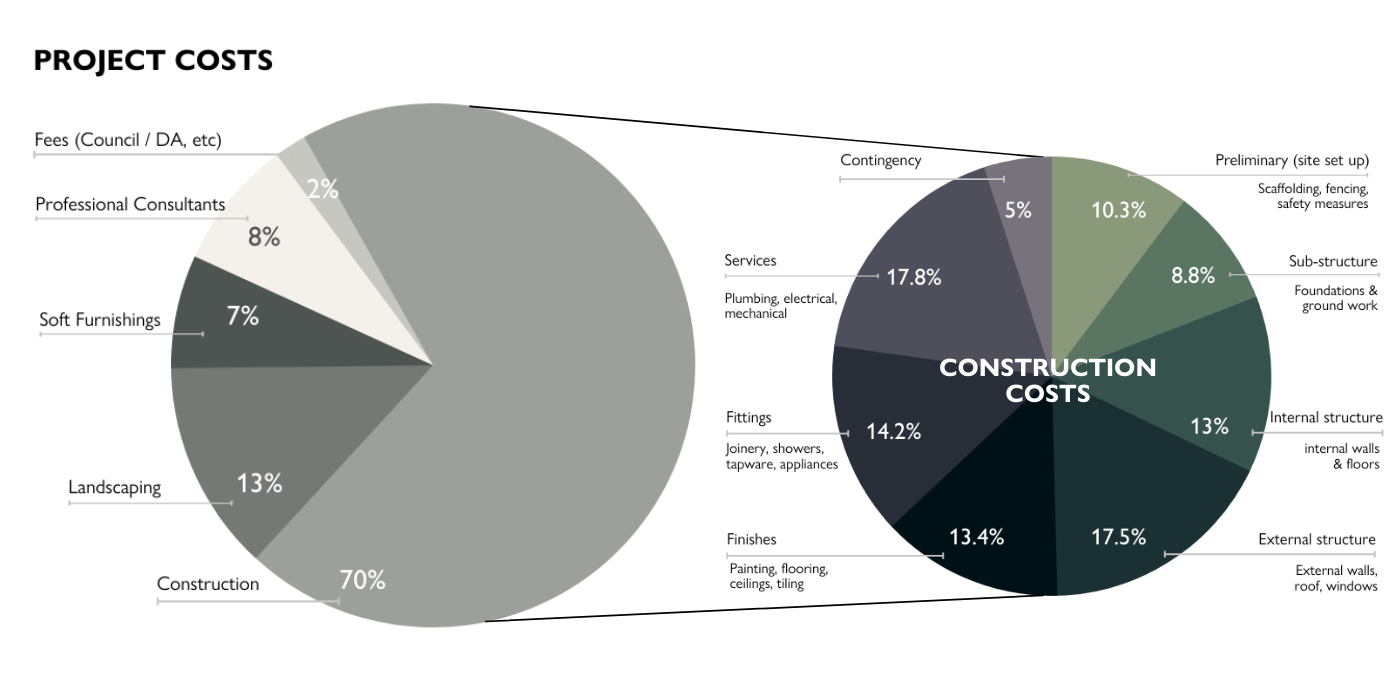
Many factors come into play when setting a budget for your major home renovation. The fun part, of course, is choosing things like your new floor plan design, mood boarding your desired aesthetic, selecting furnishings, fixtures and fittings, and imagining how much easier family life is going to be once your project is finished. The less fun, but necessary, part is working out how much of your budget needs to be allocated for specialist consultants, planning submission fees, construction materials, and site setup costs. We have prepared this quick guide to help you better understand what a home renovation budget might look like, how costs tend to be allocated, and when they need to be paid.
How Much Should You Budget for Specialist Consultants?
Engaging external specialist consultants is a necessary part of undergoing a DA or CDC for your home. Which consultants you will need depends on your project scope, site conditions, local council requirements, and existing documentation.
- Town Planner – Approximately $2,000
- Site Survey – Approximately $2,500
- Stormwater / Hydraulic Engineer – Approximately $3,000–$5,000
- Structural Engineer – Approximately $3,000–$5,000
- Geotechnical Engineer – Approximately $1,000–$1,500
- Arborist – Approximately $5,000–$6,000
- Quantity Surveyor – Approximately $1,500
What About Architectural Design Fees?
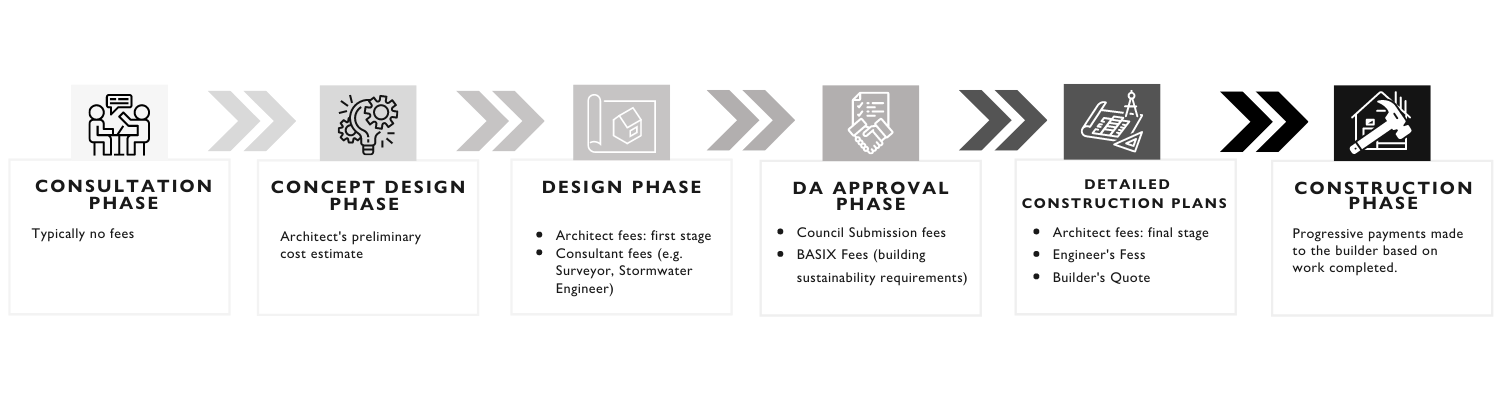
In NSW, architect fees are generally charged as either a fixed percentage of the total construction cost or an hourly rate. Additional disbursements may also apply. Most architects offer an initial consultation before providing a fee proposal. Once approved, a deposit of approximately 10–20% is usually required to commence design work. At MILEHAM, a 20% deposit is required to begin the design process. The remaining balance is invoiced as each design stage is completed.
How Much Are Planning Submission Fees?
Planning submission fees vary between councils and certifiers. In NSW, homeowners should generally budget up to $4,000 for DA or CDC submissions.
How Are Construction Costs Paid?
Your builder will use your architect’s construction drawings to prepare a detailed quote, which forms part of the building contract.
- Staged Payments
- Stage 1 – Site Clearing and Foundation
- Stage 2 – Framing
- Stage 3 – Lock-Up / Weatherproof
- Stage 4 – Rough-In Services
- Stage 5 – Fit-Off / Completion
- Stage 6 – Practical Completion
- Time-Based Payments – Builders calculate the value of work completed each month and invoice accordingly. Most homeowners prefer staged payments because they provide better project accountability.
Top Tips to Avoid a Budget Blowout
- It pays to use a qualified Architect who will provide rigorous and highly detailed plans, leading to more accurate construction costs. Your architect’s plans form part of your building contract, so they should be accurate, detailed and ironclad. This way there is no confusion, misunderstanding or disagreement between parties.
- Ensure your Architect knows how to properly cost your designs into a build. Nearly 40% of architecturally designed homes in Australia never make it to the build phase because the architectural designs have exceeded the build budget. Before moving forward to the Approvals phase (DA or CDC), ensure your architect provides a preliminary build cost estimate. If they are unable to provide sufficient detail, take your plans to a builder before lodging approvals to confirm your design aligns with your construction budget. There is nothing more disappointing than receiving approval for a dream home you cannot afford to build.
- Have your architect manage your project from design through to construction completion. Your architect can query and negotiate any cost variations or changes on your behalf throughout the construction process.
- Ensure the provisional costs provided in your building quote are realistic. If your quote allows for basic finishes, fittings and appliances but you ultimately choose premium designer selections, your budget can quickly exceed expectations.
- Allow for a contingency in your project budget. You should allocate approximately 5% of your construction budget for contingencies in case you change materials, request design modifications (such as kitchen cabinetry revisions), or unforeseen circumstances arise, such as asbestos being discovered during demolition.
Finding a professional project partner who can help you navigate the complicated elements involved, the relationship between them, and the proportional breakdown of every component of your project budget is paramount to ensuring your project runs smoothly, without surprises, and stays within a realistic budget and timeline.
Still Unsure if Your Home Renovation or New Build Budget Is Realistic? At MILEHAM, we are not only proficient in providing beautiful architectural family home design solutions for our clients, we also pride ourselves on guiding our clients through the often complex consultant, planning submission and authority approval requirements to ensure your project’s overall budget is realistic from day one.
Book your complimentary consultation with MILEHAM today and receive personalised advice on how to best align your dream home goals with your budget.