In the ever-evolving world of home renovation and new home building, price per square metre (PPSM) costing has long been a go-to metric for homeowners and builders alike. However, it has become increasingly evident that relying solely on this metric is an oversimplification of the complex factors that influence construction costs. Here, we delve into the history behind why price per square metre is so popular, and why it may not be the most accurate, effective or relevant guide for your home renovation or new home build.
The Historical Perspective: The Rise of Price per Square Metre
The quest for a standardised metric to evaluate construction costs can be traced back to a time when simplicity was key. The price per square metre approach emerged as a seemingly straightforward way to compare the cost of different construction projects. Its simplicity appealed to homeowners, builders and suppliers, providing a quick and easy method to estimate the financial scope of a project. This metric became a widely accepted rule of thumb, guiding countless decisions in the home construction industry.
Many project (or volume) home builders still advertise price per square metre as a way for consumers to compare their selection of home designs. They work from standardised plans that offer tiers such as Basic, Mid-Range and Luxury, which factor in specific materials and finishes for a home to be built on a flat block in a given location. This method of pricing can simplify the process when deciding which project home design best suits your budget and aspirations.
Even today, consumers are accustomed to comparing items like tiles, carpet and flooring on a price per square metre basis. This is a simple comparison when only looking at the actual flooring material, however the cost of installation will likely vary greatly depending on the shape of your room, the condition of existing floors, the pattern you want, and the materials you’re working with (e.g. it will be cheaper – from a labour perspective – to lay large format tiles than if you’re laying a small, intricate mosaic). Here’s where the complexities of cost start creeping in, and the efficiency of PPSQ starts blowing out.
As soon as any level of customisation is required, construction challenges are identified, or a particularly skilled labour is needed, relying on price per square metre becomes more difficult and less accurate.
The Changing Landscape: Why Price per Square Metre Is No Longer a Reliable Guide
The price per square metre rule may be convenient, but it does not provide a fair or accurate comparison when assessing renovation or custom home construction quotes.
1. Quality of Materials
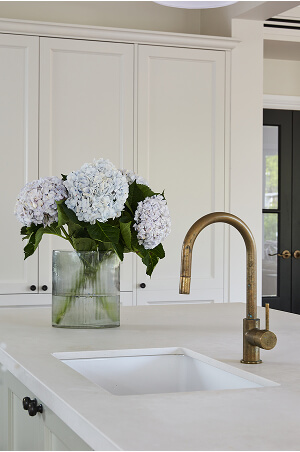
Price per square metre doesn’t account for differences in material quality. Consider two kitchens of identical size. One features a prefabricated kitchen with laminate benchtops and standard fixtures, while the other includes custom joinery, imported marble, designer appliances and premium tapware. Although identical in size, their construction costs will differ substantially.
2. Customisation and Design Complexity
Every renovation and custom home is unique. Price per square metre ignores design complexity, site-specific construction challenges, custom features and architectural detailing. Two homes with identical floor areas may have vastly different construction costs due to their layouts, structural requirements and design complexity.
3. Room Types and Their Functions
Not every room costs the same to build. External walls require insulation, structural support, windows, cladding, drainage and scaffolding, while internal walls require far less work. Likewise, kitchens and bathrooms require plumbing, waterproofing, electrical work, cabinetry and premium finishes, making them considerably more expensive than bedrooms or living areas of the same size.
4. Labour Costs and Skill Levels
Different construction tasks require different levels of expertise. Intricate carpentry, specialist stone installation and bespoke finishes require skilled tradespeople, increasing labour costs well beyond what a simple square metre calculation can represent.
5. Site-Specific Challenges
The site itself has a major impact on construction costs. Sloping blocks, limited access, poor soil conditions and additional planning requirements can all significantly increase costs that are not reflected in a standard PPSM estimate.
6. Technology and Energy Efficiency
Modern homes increasingly incorporate advanced technology and sustainable design. Smart home systems, energy-efficient construction and integrated automation improve long-term performance but increase upfront construction costs that PPSM calculations fail to recognise.
7. Geographic Variations
Construction costs vary depending on location. Material pricing, labour rates and local council requirements differ substantially between metropolitan and regional areas, making a universal square metre rate unrealistic.
8. Project Management and Oversight
Effective project management is an essential part of successful construction. Complex projects require greater coordination, planning and supervision, all of which influence project cost but are not reflected in a simple price per square metre calculation.
From Accurate Estimates to Tailored Quotes: MILEHAM’s Custom Approach
While price per square metre may still provide a useful benchmark for comparing project homes and some building materials, MILEHAM recognises the limitations of this broad approach. Construction costs are influenced by many variables that extend far beyond floor area alone.
Instead, MILEHAM assesses the specific requirements of every project, identifying the labour, materials, craftsmanship and construction methods required at every stage to provide a transparent and personalised build quotation without unexpected costs.
Our 20+ years of industry experience as both Registered Architects and custom home builders enables us to prepare accurate preliminary cost estimates early in the design process and detailed fixed-price building quotes once your DA or CDC plans have been approved.
To better understand the likely costs of your home renovation or new home build, contact MILEHAM today to arrange a free consultation and receive an initial build cost estimate.